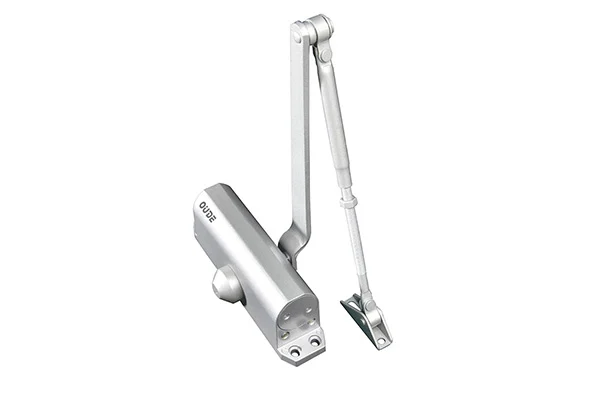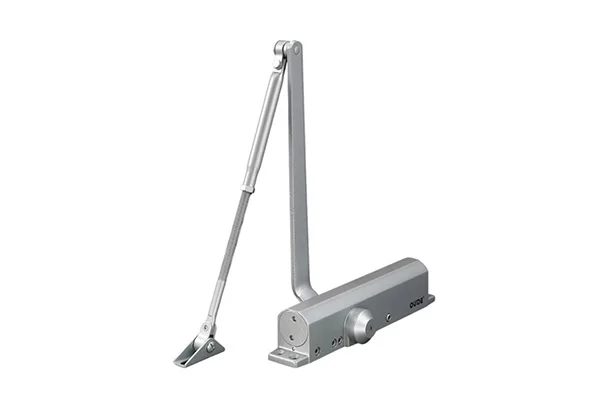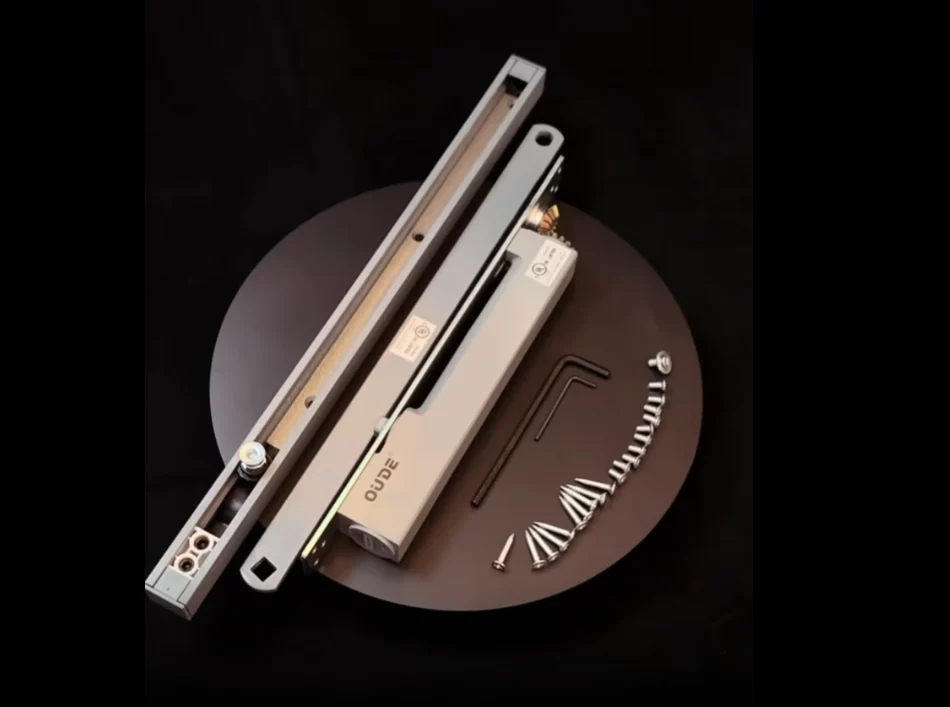

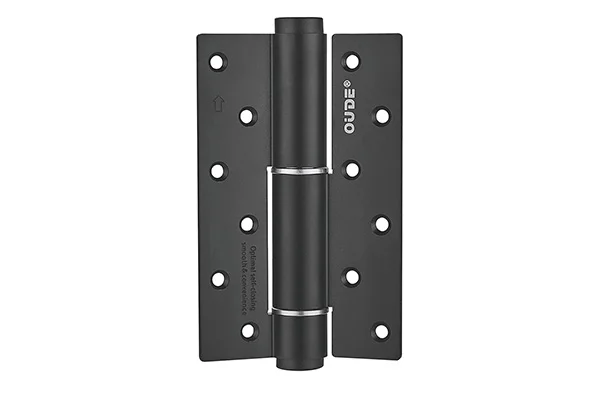
A hydraulic hinge is a specialized hinge that achieves a noise-dampening, soft-close effect through the directional flow of high-density oil within a sealed chamber; it is currently one of the most widely used soft-close hardware components in the furniture, door, and window industries.
Working Principle of Hydraulic Hinges
When the door panel is opened, a four-bar linkage mechanism drives the damper’s piston rod to extend, while a torsion spring twists and deforms to store restoring torque. Simultaneously, damping oil flows rapidly from the rodless chamber on one side of the piston to the rod-side chamber on the other, resulting in almost no noticeable resistance during the opening process.
When the door closes to a preset angle of approximately 60°, the restoring torque released by the torsion spring pushes the door to close automatically. At this point, the piston moves in the opposite direction, forcing the damping oil through tiny throttle holes in the piston. Because the apertures are extremely small, the flow rate is significantly restricted, generating stable damping resistance that counteracts the door’s kinetic energy. The door closes gently at a constant, slow speed—taking 3 to 6 seconds—without any noticeable impact or noise.
In summary, hydraulic hinges generate resistance through the directional flow of high-density damping oil within a sealed chamber, converting the kinetic energy of the closing door into dissipated heat energy, ultimately ensuring the door closes slowly, silently, and without impact.
Differences Between Hydraulic Hinges and Standard Hinges
The basic function of a hinge is to enable the opening and closing of cabinet doors. The distinction between hydraulic hinges and standard hinges lies in the inclusion of a hydraulic system in the former. This system controls force, speed, and movement, ensuring smooth and steady motion. The simple act of opening the door exerts pressure on the hydraulic fluid via an internal mechanical structure; the force generated by this fluid pressure subsequently drives the cabinet door back to its initial position.
Applications of Hydraulic Hinges
- Home Furnishings: Widely used for connecting doors on custom furniture such as wardrobes, kitchen cabinets, bookcases, and TV stands; they are a standard hardware component in modern home interiors.
- Industrial Sector: Suitable for articulated joints in mining, port, and construction machinery; also used for high-precision, cushioned connections in aircraft and industrial doors and windows.
- Commercial Sector: Widely used for solid wood, glass, and concealed doors in office buildings and hotels; certain smart models can integrate with smart home systems to enable automatic opening and closing.